

ATLAS AI & Data-Driven Asset Tracking, Lifecycle & Analytics System Ministry of Health Malaysia

Ventilator Failure Risk Prediction

Enter parameters or use presets; export the flow + gauges as PNG/PDF.

Sensor: Stopped
Next reading in: —

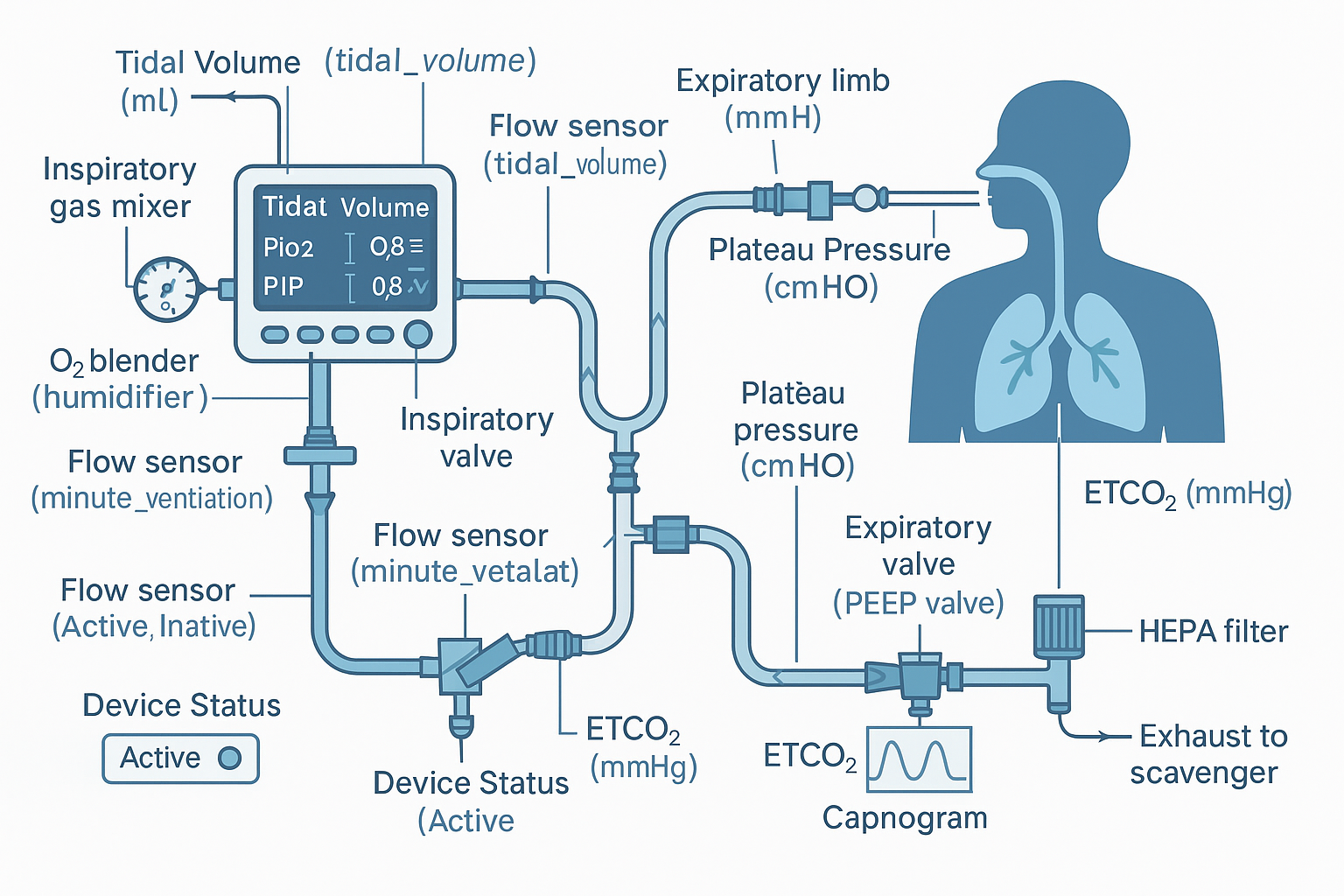
Interactive Ventilator Parameter Flow
Ventilator
Ventilator 2
mL
breaths/min
%
cmH₂O
cmH₂O
cmH₂O
L/min
Tip: MV ≈ Vt × RR (in L/min)
mmHg
Rule score: —
Suggested risk: —
Note: ↑PIP/Plateau/PEEP/FiO₂/ETCO₂ or alarms → higher risk

How ATLAS works, from start to finish

Follow one ventilator through the system. Each example runs through the real ATLAS checks when you choose it. Nothing is saved and no alert is sent.

Step 1 of 9

A machine is running

A ventilator helps a patient breathe. If it starts to drift or fail, the patient depends on it being caught early.

Working today BEMS holds the national medical device register.

In this example

Turn on JavaScript to run the example.

Step 2 of 9

Its readings are taken

Think of a health check on the machine: pressures, breathing rate, oxygen and any alarms that are on.

Partly working Readings are typed in or taken from the simulated monitor. Live device links are planned.

In this example

Turn on JavaScript to run the example.

Step 3 of 9

ATLAS keeps the record

The result is kept as a ticket against the device, so its history stays in one place.

Working today Tickets and repair logs are saved in one central database.

In this example

Turn on JavaScript to run the example.

Step 4 of 9

Readings meet the rules

ATLAS adds the readings and alarms into one rule score, the way a nurse adds up an early warning score.

Working today Works now for all five BEMS device types.

In this example

Turn on JavaScript to run the example.

Step 5 of 9

AI gives a second opinion

A neural network trained on past ventilator data gives its own view of the risk.

Working today Works now. It is shown beside the rule score as a second opinion.

In this example

Turn on JavaScript to run the example.

Step 6 of 9

A risk level is given

All of that becomes one simple answer: Low, Medium, High or Critical.

Working today Works now. The ticket follows the rule score, even if the AI rates it higher.

In this example

Turn on JavaScript to run the example.

Step 7 of 9

The right people are told

Every result opens a ticket and sends a Telegram message, so nobody has to go looking for it.

Working today Works now for real predictions. This example sends nothing.

In this example

Turn on JavaScript to run the example.

Step 8 of 9

The team fixes it

The ticket sets how quickly the team must respond, arrive and restore the device. Higher risk means less time.

Working today Works now, with deadlines tracked on the SLA pages.

In this example

Turn on JavaScript to run the example.

Step 9 of 9

Managers see the big picture

Leaders can see repair performance, risky assets and what to replace next, and plan the money for it.

Working today SLA, KPI, assessment and replacement pages are available.

In this example

Turn on JavaScript to run the example.

Next stage, planned: repair results feed back into the AI, so ATLAS keeps learning from what really happened.